## Timeline of events
Elon Musk’s latest legal filing against OpenAI marks his fourth attempt in less than a year to reframe his claims. However, his own words and actions speak for themselves—in 2017, Elon not only wanted, but actually created, a for-profit as OpenAI’s proposed new structure. When he didn’t get majority equity and full control, he walked away and told us we would fail. Now that OpenAI is the leading AI research lab and Elon runs a competing AI company, he’s asking the court to stop us from effectively pursuing our mission.
The public benefit corporation created by Elon Musk on September 15, 2017, as the proposed future structure of OpenAI.
You can’t sue your way to AGI. We have great respect for Elon’s accomplishments and gratitude for his early contributions to OpenAI, but he should be competing in the marketplace rather than the courtroom. It is critical for the U.S. to remain the global leader in AI. Our mission is to ensure AGI benefits all of humanity, and we have been and will remain a mission-driven organization. We hope Elon shares that goal, and will uphold the values of innovation and free market competition that have driven his own success.
## November 2015: OpenAI started as a nonprofit, which Elon questioned
On November 20, 2015, Elon said: “Also, the structure doesn't seem optimal…. Probably better to have a standard C corp with a parallel nonprofit.” We felt a nonprofit was the right path at the time, but later came to realize that our structure would have to evolve to attract the capital necessary for the mission.
––––– Forwarded message –––––
From:Elon Musk <redacted>
Date:Fri, Nov 20, 2015 at 12:29 PM
To:Sam Altman <redacted>
I think this should be independent from (but supported by) YC, not what sounds like a subsidiary.
Also, the structure doesn’t seem optimal. In particular, the YC stock along with a salary from the nonprofit muddies the alignment of incentives. Probably better to have a standard C corp with a parallel nonprofit.
On Nov 20, 2015, at 11:48 AM, Sam Altman <redacted>wrote:
Plan is to have you, me, and Ilya on the Board of Directors for YC AI, which will be a Delaware non-profit. We will also state that we plan to elect two other outsiders by majority vote of the Board.
We will write into the bylaws that any technology that potentially compromises the safety of humanity has to get consent of the Board to be released, and we will reference this in the researchers’ employment contracts.
At a high level, does that work for you?
I’m cc’ing our GC <redacted> here–is there someone in your office he can work with on the details?
## December 2015: OpenAI publicly announced
OpenAI was introduced to the world.
## Early 2017: Our research progress led us to realize we would need billions of dollars for the compute to build AGI.
In 2017, we made progress on building an AI for the competitive video game, Dota. We discovered we would need far more compute than we initially imagined.
On June 13, 2017, Elon responded to an email, saying, “Ok. Let’s figure out the least expensive way to ensure compute power is not a constraint…”
Ilya reiterated on July 12, 2017, “Each year, we'll need to exponentially increase our hardware spend, but we have reason to believe AGI can ultimately be built with less than $10B in hardware.”
### Re: Followup thoughts
From:Elon Musk <redacted>
Date:Fri, Feb 19, 2016 at 12:05 AM
To:Ilya Sutskever <redacted>
Cc:Greg Brockman <redacted>, Sam Altman <redacted>
Frankly, what surprises me is that the AI community is taking this long to figure out concepts. It doesn’t sound super hard. High-level linking of a large number of deep nets sounds like the right approach or at least a key part of the right approach.███████████████████████████████
The probability of DeepMind creating a deep mind increases every year. Maybe it doesn’t get past 50% in 2 to 3 years, but it likely moves past 10%. That doesn’t sound crazy to me, given their resources.
In any event, I have found that it is far better to overestimate than underestimate competitors.
This doesn’t mean we should rush out and hire weak talent. I agree that nothing good would be achieved by that. What we need to do is redouble our efforts to seek out the best people in the world, do whatever it takes to bring them on board and imbue the company with a high sense of urgency.
It will be important for OpenAI to achieve something significant in the next 6 to 9 months to show that we are for real. Doesn’t need to be a whopper breakthrough, but it should be enough for key talent around the world to sit up and take notice.
████████████████████████████████████████████████████████████████████████████████████████████████████████████
From:Ilya Sutskever <redacted>
Date:Fri, Feb 19, 2016, at 10:28 AM
To:Elon Musk <redacted>
Cc:Greg Brockman <redacted>, Sam Altman <redacted>
### Bi-weekly updates
From:Ilya Sutskever <redacted>
Date:Mon, Jun 12, 2017 at 10:39 PM
To:Greg Brockman <redacted>, <redacted>, Elon Musk <redacted>
This is the first of our bi-weekly updates. The goal is to keep you up to date, and to help us make greater use from your visits.
Rapid learning of new games:
Self play as a key path to AGI:
We have a few more cool smaller projects. Updates to be presented as they produce significant results.
From:Elon Musk <redacted>
Date:Mon, Jun 12, 2017 at 10:52 PM
To:Ilya Sutskever <redacted>
Cc:Greg Brockman <redacted>, <redacted>
Thanks, this is a great update.
From:Elon Musk <redacted>
Date:Tue, Jun 13, 2017 at 10:24 AM
To:Ilya Sutskever <redacted>
Cc:Greg Brockman <redacted>, <redacted>
Ok. Let’s figure out the least expensive way to ensure compute power is not a constraint…
### The business of building AGI
From:Ilya Sutskever <redacted>
Date:Wed, Jul 12, 2017 at 1:36 PM
To:Elon Musk <redacted>, Greg Brockman <redacted>
We usually decide that problems are hard because smart people have worked on them unsuccessfully for a long time. It’s easy to think that this is true about AI. However, the past five years of progress have shown that the earliest and simplest ideas about AI — neural networks — were right all along, and we needed modern hardware to get them working.
Historically, AI breakthroughs have consistently happened with models that take between 7–10 days to train. This means that hardware defines the surface of potential AI breakthroughs. This is a statement about human psychology more than about AI. If experiments take longer than this, it’s hard to keep all the state in your head and iterate and improve. If experiments are shorter, you’ll just use a bigger model.
It’s not so much that AI progress is a hardware game, any more than physics is a particle accelerator game. But if our computers are too slow, no amount of cleverness will result in AGI, just like if a particle accelerator is too small, we have no shot at figuring out how the universe works. Fast enough computers are a necessary ingredient, and all past failures may have been caused by computers being too slow for AGI.
Until very recently, there was no way to use many GPUs together to run faster experiments, so academia had the same “effective compute” as industry. But earlier this year, Google used two orders of magnitude more compute than is typical to optimize the architecture of a classifier, something that usually requires lots of researcher time. And a few months ago, Facebook released a paper showing how to train a large ImageNet model with near-linear speedup to 256 GPUs (given a specially-configured cluster with high-bandwidth interconnects).
Over the past year, Google Brain produced impressive results because they have an order of magnitude or two more GPUs than anyone. We estimate that Brain has around 100k GPUs, FAIR has around 15–20k, and DeepMind allocates 50 per researcher on question asking, and rented 5k GPUs from Brain for AlphaGo. Apparently, when people run neural networks at Google Brain, it eats up everyone’s quotas at DeepMind.
We're still missing several key ideas necessary for building AGI. How can we use a system's understanding of “thing A” to learn “thing B” (e.g. can I teach a system to count, then to multiply, then to solve word problems)? How do we build curious systems? How do we train a system to discover the deep underlying causes of all types of phenomena — to act as a scientist? How can we build a system that adapts to new situations on which it hasn’t been trained on precisely (e.g. being asked to apply familiar concepts in an unfamiliar situation)? But given enough hardware to run the relevant experiments in 7–10 days, history indicates that the right algorithms will be found, just like physicists would quickly figure out how the universe works if only they had a big enough particle accelerator.
There is good reason to believe that deep learning hardware will speed up 10x each year for the next four to five years. The world is used to the comparatively leisurely pace of Moore’s Law, and is not prepared for the drastic changes in capability this hardware acceleration will bring. This speedup will happen not because of smaller transistors or faster clock cycles; it will happen because like the brain, neural networks are intrinsically parallelizable, and new highly parallel hardware is being built to exploit this.
Within the next three years, robotics should be completely solved, AI should solve a long-standing unproven theorem, programming competitions should be won consistently by AIs, and there should be convincing chatbots (though no one should pass the Turing test). In as little as four years, each overnight experiment will feasibly use so much compute capacity that there’s an actual chance of waking up to AGI, given the right algorithm — and figuring out the algorithm will actually happen within 2–4 further years of experimenting with this compute in a competitive multiagent simulation.
To be in the business of building safe AGI, OpenAI needs to:
2/3/4 will ultimately require large amounts of capital. If we can secure the funding, we have a real chance at setting the initial conditions under which AGI is born. Increased funding needs will come lockstep with increased magnitude of results. We should discuss options to obtain the relevant funding, as that’s the biggest piece that’s outside of our direct control.
████████████████████████████████████
██████████████████████████████████████████████████████████████████████████████████████████████████████████████████████████████████████████████████████████████████████
███████████████████████████████████████████████████████████████████████████████████████████████████████████████
## Summer 2017: We and Elon agreed that a for-profit was the next step for OpenAI to advance the mission
On July 13th, 2017, Greg sent Shivon Zilis, who was operating as a liaison between Elon and OpenAI, recap notes from a meeting with Elon that day where we proposed an idea to merge with a hardware startup, saying it “turned into talking about structure (he said non-profit was def the right one early on, may not be the right one now — ilya and I agree with this for a number of reasons).”
ocean: agreed on announcing around the international; he suggested playing against the best player from the winning team which seems cool to me. I asked him to call<redacted> and he said he would. I think this is better than our default of announcing in advance we’ve beaten the best 1v1 player and then having our bot playable at a terminal at TI ████████████████████████████████████████.
gpus: said do what we need to do
cerebras: we talked about the reverse merger idea a bit. independent of cerebras, turned into talking about structure (he said non-profit was def the right one early on, may not be the right one now — ilya and I agree with this for a number of reasons). He said he’s going to Sun Valley to ask <redacted> to donate.
<redacted> and others. Will try to work it for ya.
iMessage conversation between Greg Brockman (blue/right) and Shivon Zilis (grey/left)
On July 21st, 2017, Elon forwarded an article about China’s plan to match the U.S. in AI research facilities by 2020 and become the world leader in AI by 2030 in order to support agriculture and manufacturing as well as homeland security and surveillance efforts. Elon said, “They will do whatever it takes to obtain what we develop. Maybe another reason to change course.”
Greg agreed, saying that starting 2018 the path would need to be a “AI research + hardware for-profit”. Elon responded, “Let's talk Sat or Sun. I have a tentative game plan that I'd like to run by you.”
### Beijing Wants A.I. to Be Made in China by 2030 - NYTimes.com
From:Elon Musk <redacted>
Date:Fri, Jul 21, 2017 at 3:34 AM
To:Greg Brockman <redacted>, Ilya Sutskever <redacted>
They will do whatever it takes to obtain what we develop. Maybe another reason to change course.
[Link to news article]
From:Greg Brockman <redacted>
Date:Fri, Jul 21, 2017 at 1:18 PM
To:Elon Musk <redacted>
Cc:Ilya Sutskever <redacted>
100% agreed. We think the path must be:
1. AI research non-profit (through end of 2017) 2. AI research + hardware for-profit (starting 2018) 3. Government project (when: ??)
█████████████████████████████████████████████████████████████████████████████████████████████████████████████████████████████████████████████████████████████████████████████████
From:Elon Musk <redacted>
Date:Fri, Jul 21, 2017 at 1:18 PM
To:Greg Brockman <redacted>
Cc:Ilya Sutskever <redacted>, <redacted>
Let’s talk Sat or Sun. I have a tentative game plan that I’d like to run by you.
On August 11, 2017, our AI beat the world’s best players at Dota 1v1. That night, Elon told us “Time to make the next step for OpenAI. This is the triggering event.”
### Tomorrow afternoon
From:Elon Musk <redacted>
Date:Fri, Aug 11, 2017 at 9:17 PM
To:Greg Brockman <redacted>, Ilya Sutskever <redacted>, Sam Altman <redacted>
Cc:<redacted>, Shivon Zilis <redacted>
████████████████████████████████ Are you guys able to meet or do a conf call tomorrow afternoon?
Time to make the next step for OpenAI. This is the triggering event.
## Fall 2017: Elon demanded majority equity, absolute control, and to be CEO of the for-profit.
Over the next six weeks, we negotiated terms for the for-profit.
Elon demanded majority equity. On September 4, 2017, Shivon wrote in a message to Greg, “And he sounded fairly non-negotiable on his equity being between 50-60 so moot point on having majority”. On one call, Elon told us he didn’t care about equity personally but just needed to accumulate $80B for a city on Mars.
Actually I'm still slightly confused on the proposed detail around the share % and board control
Given it sounds like proposal is that Elon always gets max(3 seats, 25% of seats) and all the power rests with the board
Yes. Though I am guessing he intended your overrule provision for first bit but I'm not sure
So what power does having a certain % of shares have?
Sounds like intention is static board members, or at least board members coming statically from certain pools
But yeah would be curious to hear the specifics. Also I guess for even board sizes a 50% means no action?
I think it would grow to at least 7 pretty quick. The question is not that but when does it transition to traditional board if in fact transitions
And he sounded fairly non-negotiable on his equity being between 50-60 so moot point of having majority
iMessage conversation between Greg Brockman (blue/right) and Shivon Zilis (grey/left)
On September 12, 2017, Elon laid out a board structure where he would “unequivocally have initial control of the company”.
### Re: Current State
From:Elon Musk <redacted>
Date:Wed, Sep 13, 2017 at 12:40 AM
To:Ilya Sutskever <redacted>
Cc:Greg Brockman <redacted>
Sounds good. The three common stock seats (you, Greg and Sam) should be elected by common shareholders. They will de facto be yours, but not in the unlikely event that you lose the faith of a huge percentage of common stockholders over time or step away from the company by choice.
I think that the Preferred A investment round (supermajority me) should have the right to appoint four (not three) seats. I would not expect to appoint them immediately, but, like I said I would unequivocally have initial control of the company, but this will change quickly.
The rough target would be to get to a 12 person board (probably more like 16 if this board really ends up deciding the fate of the world) where each board member has a deep understanding of technology, at least a basic understanding of AI and strong & sensible morals.
Apart from the Series A four and the Common three, there would likely be a board member with each new lead investor/ally. However, the specific individual new board members can only be added if all but one existing board member agrees. Same for removing board members.
There will also be independent board members we want to add who aren’t associated with an investor. Same rules apply: requires all but one of existing directors to add or remove.
I’m super tired and don’t want to overcomplicate things, but this seems approx right. At the sixteen person board level, we would have 7/16 votes and I’d have a 25% influence, which is my min comfort level. That sounds about right to me. If everyone else we asked to join our board is truly against us, we should probably lose.
As mentioned, my experience with boards (assuming they consist of good, smart people) is that they are rational and reasonable. There is basically never a real hardcore battle where an individual board vote is pivotal, so this is almost certainly (sure hope so) going to be a moot point.
As a closing note, I’ve been really impressed with the quality of discussion with you guys on the equity and board stuff. I have a really good feeling about this.
Lmk if above seems reasonable.
Elon also told us he would need to be CEO.
## September 2017: Elon created the public benefit corporation called “Open Artificial Intelligence Technologies, Inc.”
Elon directed Jared Birchall, his wealth manager, to create the public benefit corporation “Open Artificial Intelligence Technologies, Inc” (akin to SpaceX’s official name of “Space Exploration Technologies Corporation”). It was registered on on September 15, 2017:
The public benefit corporation created by Elon Musk on September 15, 2017, as the proposed future structure of OpenAI.
## September 2017: We rejected Elon's terms because giving him unilateral control of OpenAI and its technology would be contrary to the mission.
We came close to accepting Elon’s terms. As we told him, “We really want to work with you. We believe that if we join forces, our chance of success in the mission is the greatest.”
However, we felt his proposal was not compatible with the mission, saying: “The current structure provides you with a path where you end up with unilateral absolute control over the AGI. You stated that you don't want to control the final AGI, but during this negotiation, you've shown to us that absolute control is extremely important to you.” As we told Elon, “The goal of OpenAI is to make the future good and to avoid an AGI dictatorship.”
We concluded, “Thus we are concerned that as the company makes genuine progress towards AGI, you will choose to retain your absolute control of the company despite current intent to the contrary.”
From:Ilya Sutskever <redacted>
Date:Wed, Sep 20, 2017 at 2:08 PM
To:Elon Musk <redacted>, Sam Altman <redacted>, Greg Brockman <redacted>
This process has been the highest stakes conversation that Greg and I have ever participated in, and if the project succeeds, it’ll turn out to have been the highest stakes conversation the world has seen. It’s also been a deeply personal conversation for all of us.
Yesterday while we were considering making our final commitment (even the non-solicit agreement), we realized we’d made a mistake. We have several important concerns that we haven’t raised with either of you. We didn’t raise them because we were afraid to: we were afraid of harming the relationship, having you think less of us, or losing you as partners.
There is some chance that our concerns will prove to be unresolvable. We really hope it’s not the case, but we know we will fail for sure if we don’t all discuss them now. And we have hope that we can work through them all and continue working together.
We really want to work with you. We believe that if we join forces, our chance of success in the mission is the greatest. Our upside is the highest. There is no doubt about that. Our desire to work with you is so great that we are happy to give up on the equity, personal control, make ourselves easily firable — whatever it takes to work with you.
But we realized that we were careless in our thinking about the implications of control for the world. Because it seemed so hubristic, we have not been seriously considering the implications of success.
We have a few smaller concerns, but we think it’s useful to mention it here:
When Greg and I are stuck, you’ve always had an answer that turned out to be deep and correct. You’ve been thinking about the ways forward on this problem extremely deeply and thoroughly. Greg and I understand technical execution, but we don’t know how structure decisions will play out over the next month, year, or five years.
But we haven’t been able to fully trust your judgments throughout this process, because we don’t understand your cost function.
We had a fair share of our own failings during this negotiation, and we’ll list some of them here (Elon and Sam, I’m sure you’ll have plenty to add…):
During this negotiation, we realized that we have allowed the idea of financial return 2–3 years down the line to drive our decisions. This is why we didn’t push on the control — we thought that our equity is good enough, so why worry? But this attitude is wrong, just like the attitude of AI experts who don’t think that AI safety is an issue because they don’t really believe that they’ll build AGI. We did not speak our full truth during the negotiation. We have our excuses, but it was damaging to the process, and we may lose both Sam and Elon as a result. There’s enough baggage here that we think it’s very important for us to meet and talk it out. Our collaboration will not succeed if we don’t. Can all four of us meet today? If all of us say the truth, and resolve the issues, the company that we’ll create will be much more likely to withstand the very strong forces it’ll experience.
From:Elon Musk <redacted>
Date:Wed, Sep 20, 2017 at 2:17 PM
To:Ilya Sutskever <redacted>
Cc:Sam Altman <redacted>, Greg Brockman <redacted>, <redacted>, Shivon Zilis <redacted>
Guys, I’ve had enough. This is the final straw.
Either go do something on your own or continue with OpenAI as a nonprofit. I will no longer fund OpenAI until you have made a firm commitment to stay or I’m just being a fool who is essentially providing free funding for you to create a startup.
Discussions are over.
From:Elon Musk <redacted>
Date:Wed, Sep 20, 2017 at 2:17 PM
To:Ilya Sutskever <redacted>
Cc:Sam Altman <redacted>, Greg Brockman <redacted>, <redacted>, Shivon Zilis <redacted>
To be clear, this is not an ultimatum to accept what was discussed before. That is no longer on the table.
From:Sam Altman <redacted>
Date:Wed, Sep 20, 2017 at 2:17 PM
To:Elon Musk <redacted>, Ilya Sutskever <redacted>
Cc:Greg Brockman <redacted>, <redacted>, Shivon Zilis <redacted>
I remain enthusiastic about the non-profit structure!
Elon replied, “Discussions are over” and “To be clear, this is not an ultimatum to accept what was discussed before. That is no longer on the table.”
## January 2018: Elon said OpenAI was on a path for certain failure unless we merged into Tesla.
After negotiations broke down, Elon proposed that we spin into Tesla. We would have a billion dollar budget right away and it would increase exponentially from there.
However, our team did not want to work at Tesla. We spent the next months trying to find another way to raise the capital required to achieve the mission.
On January 31, 2018, Elon told us “OpenAI is on a path of certain failure relative to Google. There obviously needs to be immediate and dramatic action or everyone except for Google will be consigned to irrelevance.”
Greg told him that, “My view is that the best future will come from a major expansion of OpenAI. Our goal and mission are fundamentally correct, and that will increasingly be a superpower as AGI grows near.”
### Fwd: Top AI institutions today
From:Elon Musk <redacted>
Date:Wed, Jan 31, 2018 at 2:02 PM
To:Greg Brockman <redacted>, Ilya Sutskever <redacted>, Sam Altman <redacted>
Cc:<redacted><redacted>, Shivon Zilis <redacted>
OpenAI is on a path of certain failure relative to Google. There obviously needs to be immediate and dramatic action or everyone except for Google will be consigned to irrelevance.
I have considered the ICO approach and will not support it. In my opinion, that would simply result in a massive loss of credibility for OpenAI and everyone associated with the ICO. If something seems too good to be true, it is. This was, in my opinion, an unwise diversion.
The only paths I can think of are a major expansion of OpenAI and a major expansion of Tesla AI. Perhaps both simultaneously. The former would require a major increase in funds donated and highly credible people joining our board. The current board situation is very weak.
I will set up a time for us to talk tomorrow. To be clear, I have a lot of respect for your abilities and accomplishments, but I am not happy with how things have been managed. That is why I have had trouble engaging with OpenAI in recent months. Either we fix things and my engagement increases a lot or we don’t and I will drop to near zero and publicly reduce my association. I will not be in a situation where the perception of my influence and time doesn’t match the reality.
From:Greg Brockman <redacted>
Date:Wed, Jan 31, 2018 at 10:56 PM
To:Elon Musk <redacted>
Cc:Ilya Sutskever <redacted>, Sam Altman <redacted>, <redacted>, Shivon Zilis <redacted>
Thank you for the thoughtful note. I have always been impressed by your focus on the big picture, and agree completely we must change trajectory to achieve our goals. Let’s speak tomorrow, any time 4p or later will work.
My view is that the best future will come from a major expansion of OpenAI. Our goal and mission are fundamentally correct, and that will increasingly be a superpower as AGI grows near.
Our fundraising conversations show that:
I respect your decision on the ICO idea, which matches the evolution of our own thinking. Sam Altman has been working on a fundraising structure that does not rely on a public offering, and we will be curious to hear your feedback.
Of the people we’ve been talking to, the following people are currently my top suggestions for board members. Would also love suggestions for your top picks not on this list, and we can figure out how to approach them.
Over the next 3 years, we must build 3 things:
We’ve talked the most about the custom AI hardware and AI data center. On the software front, we have a credible path (self-play in a competitive multiagent environment) which has been validated by Dota and AlphaGo. We also have identified a small but finite number of limitations in today’s deep learning which are barriers to learning from human levels of experience. And we believe we uniquely are on trajectory to solving safety (at least in broad strokes) in the next three years.
We would like to scale headcount in this way:
████████████████████████████████████████████████████████████████████████████████████████████████████████████████████████
Our biggest tool is the moral high ground. To retain this, we must:
I would be curious to hear how you rate our execution over the past two years, relative to resources. In my view:
Elon soon decided to resign from OpenAI.
## February 2018: Elon resigned as co-chair of OpenAI
On February 20, 2018, Elon hosted a goodbye all-hands with the team. He said we should pursue the path we saw to raising billions per year. He said he would pursue advanced AI research at Tesla, which was the only vehicle he believed could obtain this level of funding.
## December 2018: Elon told us to raise “billions per year immediately or forget it”
On December 17, 2018, we sent Elon an update on our progress and told him about “a deal to move our computing from Google to Microsoft (in addition to our own data centers).” We also offered to talk about longer-term fundraising plans . He responded, “Sounds good”.
### Re: OpenAI update
––––– Forwarded message –––––
From:Elon Musk <redacted>
Date:Mon, 17 Dec 2018 at 15:47
To:Sam Altman <redacted>
Could probably meet Wed eve in SF
On Dec 17, 2018, at 3:42 PM, Sam Altman <redacted>wrote:
In Q1 of next year, we plan to do a final Dota tournament with any pro team that wants to play for a large cash prize, on an unrestricted game. After that, we’ll call model-free RL complete, and a subset of the team will work on re-solving 1v1 Dota with model-based RL.
We also plan to release a number of robot hand demos in Q1–Rubiks cube, pen tricks, and Chinese ball rotation. The learning speed for new tasks should be very fast. Later in the year, we will try mounting two hands on two arms and see what happens…
We are also making fast progress on language. My hope is that next year we can generate short stories and a good dialogue bot.
████████████████████████████████████████████████████████████████████████████The hope is that we can use this unsupervised learning to build models that can do hard things, eg never make an image classification mistake a human wouldn’t, which to me would imply some level of conceptual understanding.
We are also making good progress in the multi-agent environment, with multiple agents now collaborating to build simple structure, play laser tag, etc.
Finally, I am working on a deal to move our computing from Google to Microsoft (in addition to our own data centers).
Also happy to talk about fundraising (we should have enough for the next ~2 years even with aggressive growth) and evolving hardware thoughts if helpful, would prefer not to put either of those in email but maybe next time you’re at Pioneer?
On December 26, 2018, Elon sent an email saying “Even raising several hundred million won’t be enough. This needs billions per year immediately or forget it.”
### I feel I should reiterate
From:Elon Musk <redacted>
Date:Wed, Dec 26, 2018 at 12:07 PM
To:Ilya Sutskever <redacted>, Greg Brockman <redacted>
Cc:Sam Altman <redacted>, Shivon Zilis <redacted>
My probability assessment of OpenAI being relevant to DeepMind/Google without a dramatic change in execution and resources is 0%. Not 1%. I wish it were otherwise.
Even raising several hundred million won’t be enough. This needs billions per year immediately or forget it.
Unfortunately, humanity’s future is in the hands of <redacted>.
█████████████████████████████████████████████████████████████████████████████████████████████████████████████████
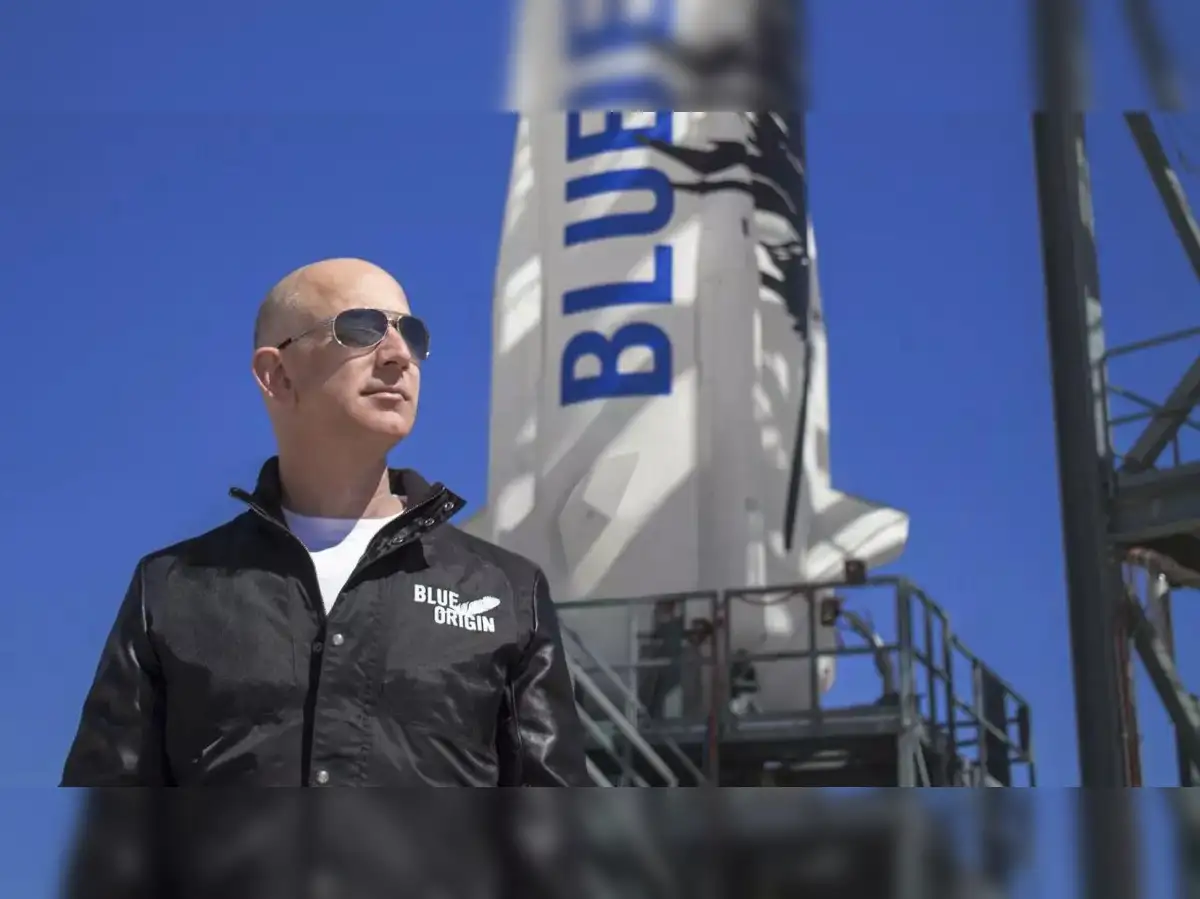
OpenAI reminds me of Bezos and Blue Origin. They are hopelessly behind SpaceX and getting worse, but the ego of Bezos has him insanely thinking that they are not!
I really hope I’m wrong.
## March 2019: Public announcement of the capped-profit OpenAI LP, which is governed by the non-profit
We sent Elon an advance copy of our OpenAI LP announcement blog post. Elon’s only feedback was: “Please be explicit that I have no financial interest in the for-profit arm of OpenAI.”
Multiple times over the years, we’ve offered Elon equity in OpenAI LP which he declined.
got this from elon, what do you suggest:
you’ve offered the stock thing to him in the past and he said no right?
i don’t know what he means by A and B round
It’s unclear what the actual issue is here. Not having stock, it still being the same entity in public belief that he initially funding (OpenAI name), or just disagreement with the direction
It was offered to him and was declined at the time. I don’t recall what actual path was decided on for that. I thought you asked him directly at one point if I’m not mistaken?
Call if you’d like additional context, but overall recommendation is don’t text back immediately
quick read if you have a second?
I agree this feels bad—we offered you equity when we established the cap profit, which you didn’t want at the time but we are still very happy to do if you’d like.
We saw no alternative to a structure change given the amount of capital we needed and still to preserve a way to ‘give the AGI to humanity’ other than the capped profit thing, which also lets the board cancel all equity if needed for safety.
Fwiw I personally have no equity and never have. Am trying to navigate tricky tightrope the best I can and would love to talk about how it can be better any time you are free. Would also love to show you recent updates.
got this back: I will be in SF most of this week for the Twitter acquisition. Let’s talk Tues or Wed.
Sorry was asleep! Long few days. Great
iMessage conversation between Sam Altman (blue/right) and Shivon Zilis (grey/left)
## March 2023: Elon started his OpenAI competitor, xAI
On March 9, 2023, Elon formed xAI—a public benefit corporation which is a direct competitor to OpenAI.
On March 22, 2023, Elon co-signed an open letter(opens in a new window) calling for a pause in training systems more powerful than GPT‑4. Since only OpenAI had a GPT‑4‑level system at that time, this was a call for only OpenAI to stop development.
Our Research * Research Index * Research Overview * Research Residency * OpenAI for Science * Economic Research
Latest Advancements * GPT-5.3 Instant * GPT-5.3-Codex * GPT-5 * Codex
Safety * Safety Approach * Security & Privacy * Trust & Transparency
ChatGPT * Explore ChatGPT(opens in a new window) * Business * Enterprise * Education * Pricing(opens in a new window) * Download(opens in a new window)
Sora * Sora Overview * Features * Pricing * Sora log in(opens in a new window)
API Platform * Platform Overview * Pricing * API log in(opens in a new window) * Documentation(opens in a new window) * Developer Forum(opens in a new window)
For Business * Business Overview * Solutions * Contact Sales
Company * About Us * Our Charter * Foundation * Careers * Brand
Support * Help Center(opens in a new window)
More * News * Stories * Livestreams * Podcast * RSS
Terms & Policies * Terms of Use * Privacy Policy * Other Policies
(opens in a new window)(opens in a new window)(opens in a new window)(opens in a new window)(opens in a new window)(opens in a new window)(opens in a new window)
OpenAI © 2015–2026 Manage Cookies
English United States