The world is entering an era of supply chain anxiety. Two geopolitical fault lines, both capable of fracturing the global economy, are converging at once.
Conflict across West Asia is squeezing energy markets and exposing the fragility of concentrated supply routes. And with China signalling intent to take control of Taiwan by the end of 2026, the stakes have risen sharply for something far more foundational: semiconductors.
Taiwan is the single most critical node in the global chip supply chain. TSMC alone produces over 60% of the world’s most advanced chips, and any disruption to Taiwan’s output could trigger estimated global economic losses of $2.5 Tn annually, per a US government report.
Previously, Covid-19 pandemic has shown the world the dangers of supply chain disruption in semiconductors. The entire auto and electronics industry had come to a halt. Now, when the world again faces the possible shortage of supply chain distribution, can India become an alternative?
India’s semiconductor ambitions are no longer theoretical. This geopolitical shift, along with strong policy support, could help create what may be a $155 Bn market by 2031, up from $62 Bn in 2026, as per Inc42’s “India’s Semiconductor Uprising Report 2026”.
The India Semiconductor Mission has already committed around ₹76,000 Cr in incentives, including capital support for fabrication projects and design-linked incentives that reduce the cost burden of chip design.
Meanwhile, more than $15 Bn has already been committed across the semiconductor value chain. This includes large anchor projects such as the Tata-PSMC fabrication plant, the Micron ATMP facility, and expanding R&D footprints from global semiconductor majors including AMD and NXP.
The push towards “China+1” sourcing and geographically diversified manufacturing has created space for new nodes to emerge.
Domestic demand adds a third layer of momentum. Smartphone production in the country has expanded sharply over the past decade, with India now accounting for a significant share of global iPhone assembly.
Alongside, a startup ecosystem is beginning to take shape. Per Inc42 data, more than 130 semiconductor startups are now active in areas like analogue design, edge AI chips, RISC-V architecture, and packaging innovation.
While the opportunity is big, can India execute fast enough to capture it?
Despite the momentum, the constraints are deep and structural which could determine whether India becomes a semiconductor hub or remains a peripheral player.
The most immediate bottleneck is capital.
Semiconductors are among the most capital-intensive industries globally, requiring billions upfront and long gestation periods. Yet, India’s investment ecosystem remains misaligned.
Where at one end the government wants to manufacture AI grade chips, the large chunk of investment is going towards the PMICs (Power Management Integrated Circuits) and SiC (Silicon Carbide) semiconductors, which largely powers vehicles, consumer electronics etc.
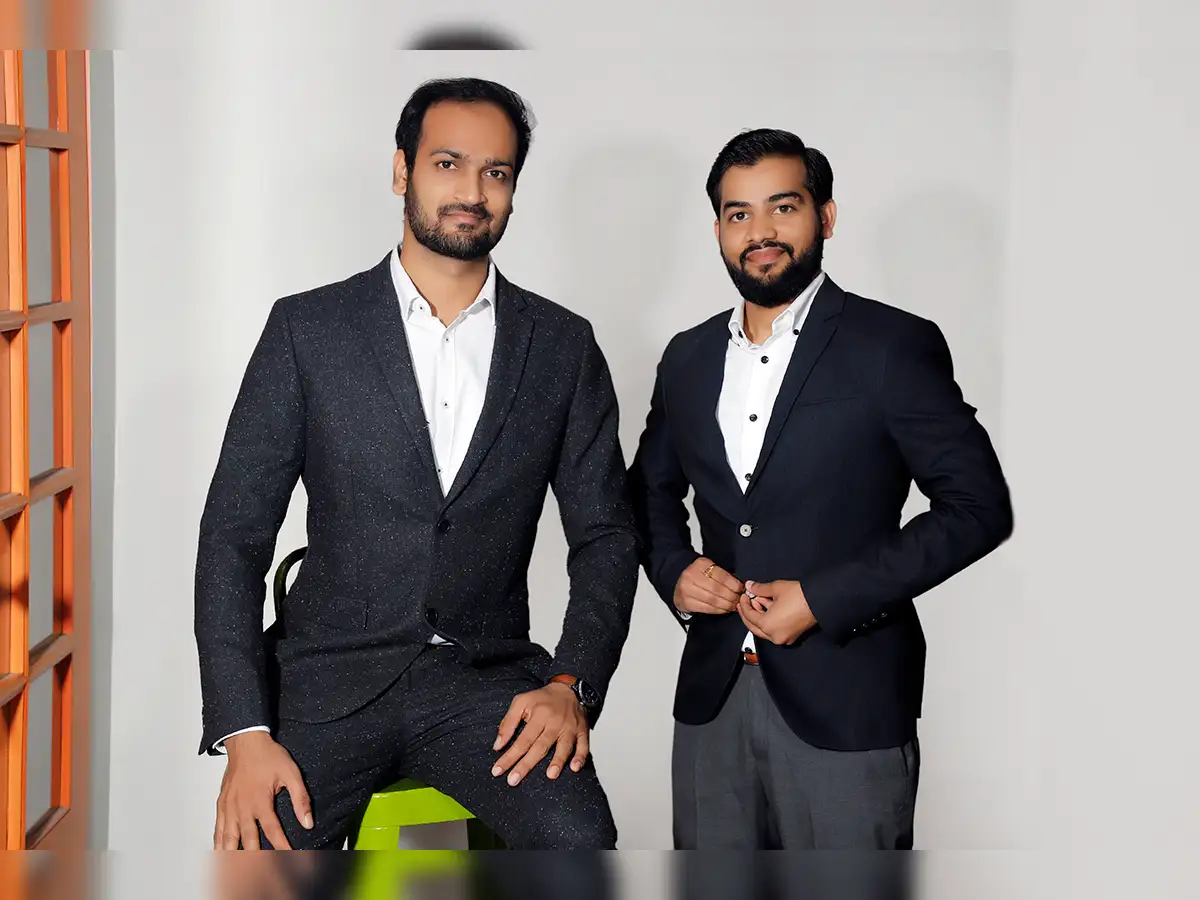
“These are essential for the EV revolution because they handle high voltages more efficiently than standard silicon. While Silicon Valley fights over the next big GPU, we are finding massive, stable returns in the chips that power India’s transitioning energy and transport sectors,” says Ajay Jain, founder and managing partner of Silverneedle Ventures, an investor in deeptech startups such as Brainsight AI, ThingsUp, Makers Hive among others.
Similarly, Dhruv Ranjan of Anicut Capital believes India’s EV and energy transition push is structurally increasing demand for SiC and GaN-based devices.
Per him, there is a push for compound semiconductors’ applications in power electronics and that is also seeing a lot of capital deployment.
However, the future of semiconductor manufacturing lies in AI grade chips, or chiplets, that can be mixed to make what essentially becomes a system on chip (SoC). Currently only a handful of companies are manufacturing them, which are either based in China, Taiwan or Singapore.
This creates a fundamental mismatch. Deeptech needs long-term, risk-tolerant funding, while Indian capital has historically favoured faster-return sectors like consumer internet and SaaS.
As robotics startup CynLr’s founder Gokul N A had previously told Inc42, that many VCs in India never figured out how to invest in deeptech startups. They evaluate the deeptechs on the same level as a D2C or a consumer facing tech company, where the returns on investments are much quicker than a typical deeptech company.
Closely linked to this is the R&D gap. India’s R&D spending stands at just around 0.6% of GDP, far below global leaders. Notably, China spends 2.4% of its GDP in R&D while for the USA the number goes up to 3.4%.
To compete meaningfully, India needs to scale this to over $100 Bn annually by 2030.
Further, the private sector contributes only about 41% of total R&D spending, which is significantly lower than mature semiconductor ecosystems where industry leads innovation.
Talent, often cited as India’s strength, is also a paradox.
While India produces 2-3 Mn STEM graduates annually and accounts for about 20% of the global semiconductor design workforce, the shortage lies in specialised, high-end research talent.
“We already have 20% of the world’s VLSI (Very Large Scale Integration) engineers. the people who design complex circuits. The 2026 milestone is that we are no longer just “renting” these engineers to global giants; we are using them to build Indian-owned brands that solve local problems, like chips for our specific 5G bands and tropical weather conditions,” says Jain.
But advanced chip development requires deep expertise in areas like materials science, lithography and high-performance computing, skills that remain limited domestically.
There is also the risk of talent outflow, as global semiconductor hubs continue to attract experienced engineers with higher compensation and better infrastructure.
And that’s even before we come to the infrastructure and natural resources needed to power up the semiconductor industry in India. Semiconductor manufacturing is highly resource-intensive, particularly in terms of, ultra-pure water, reliable power and specialised chemicals and materials
India currently faces gaps in all three areas.
According to Inc42 research, the power and water reliability is below mature hubs across the globe. Further, India has over 90% dependence on imported materials, chemicals and equipment.
This dependence exposes the ecosystem to global supply shocks, the very risk India is trying to hedge against.
Edited by Nikhil Subramaniam
The post Inside India’s $155 Bn Semiconductor Opportunity appeared first on Inc42 Media.