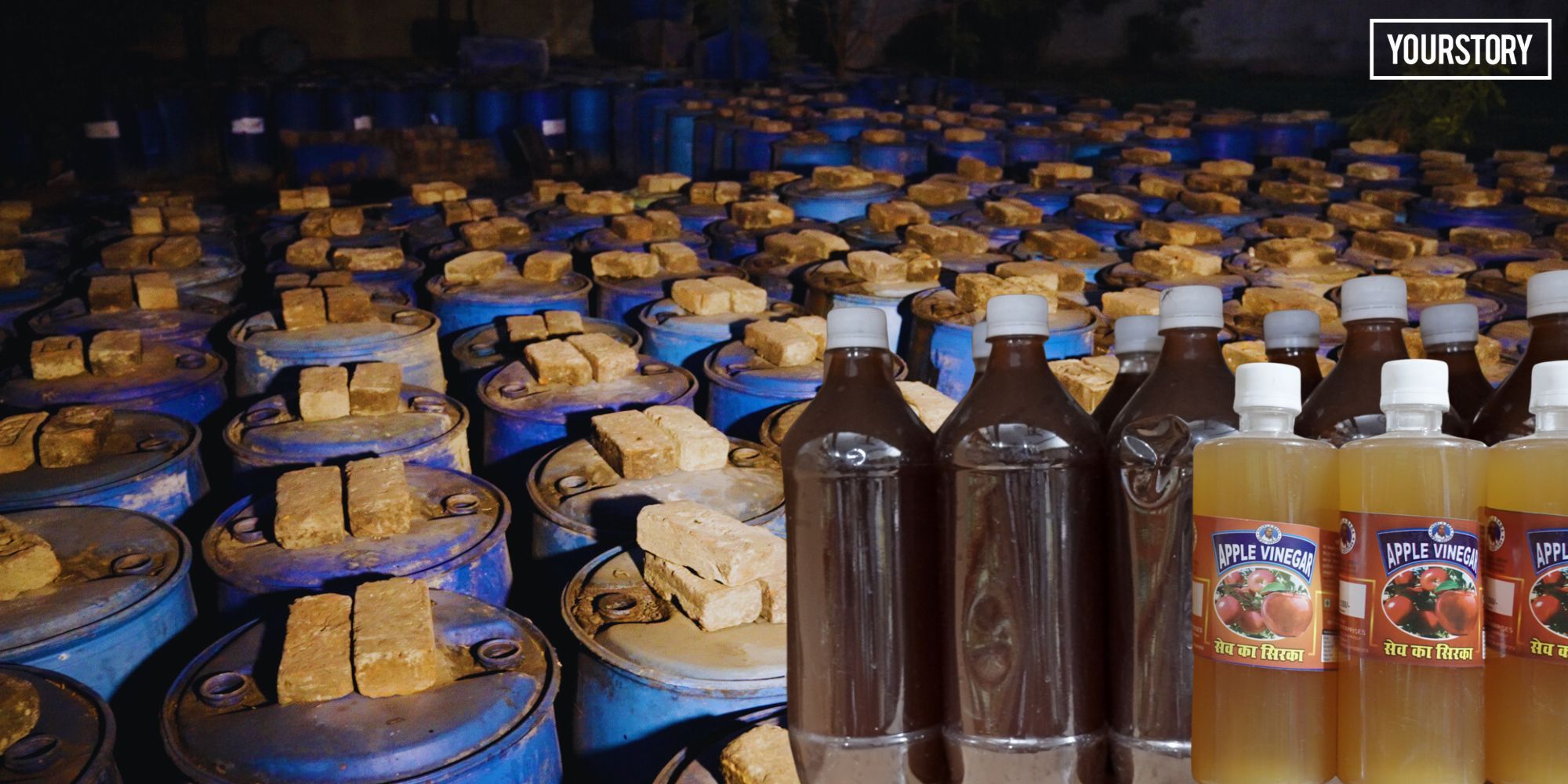
In Uttar Pradesh’s Basti district, vinegar production follows a slow and deliberate rhythm shaped by fermentation rather than fast processing. Known locally as sirka, the product is widely used in daily cooking, pickling, and food preservation. Its demand is steady through the year, as households rely on vinegar for its balanced acidity and long shelf life once opened.
Under the One District One Product (ODOP) programme, vinegar has been identified as Basti’s notified product, recognising the district’s traditional fermentation-based production methods and small-scale manufacturing units that sustain this trade.
Unlike many processed food products where output depends on quick turnaround, vinegar production in Basti is guided by patience. Raw fruit or sugarcane juice must be stored carefully, kept in separate containers depending on the source, filtered periodically, and allowed to mature naturally over time. The production cycle therefore follows the timeline of fermentation rather than daily manufacturing targets.
Among those engaged in this trade is Sabhapati Shukla, an entrepreneur from Machha village in Basti district. His vinegar-making unit traces its beginnings to 2002, when the activity was first initiated by his wife at a small scale. Over time, the family gradually expanded the unit, increasing batch size and introducing multiple varieties.
Today, the unit primarily produces sugarcane vinegar, along with smaller quantities of jamun (Java Plum / Black Plum) and apple vinegar.
Shukla explains that the production process begins with freshly extracted juice, which is filled into large drums. The containers are tied with cloth and placed in sunlight to allow fermentation to begin naturally. While the method remains similar for different fruits, each batch is stored separately to maintain purity of flavour.
The fermentation cycle usually lasts around five months, during which the liquid is filtered every month. No external additives are introduced during this stage, allowing the vinegar to develop its characteristic taste through natural processes.
Once the vinegar matures, it may be sold in its natural form or converted into flavoured variants by adding salt and spices according to customer preferences. According to Shukla, naturally fermented vinegar often forms a thin layer on the surface during the process, which settles once seasoning is added — a feature that many buyers associate with traditionally prepared sirka.
Over the years, the scale of production has expanded considerably. What began as a small activity producing around 100 litres has grown into a unit that now produces several lakh litres annually.
Sales continue to be largely local, with vinegar sold through a roadside outlet near the unit. However, customers frequently purchase the product in bulk and carry it onward to other districts and states, gradually widening its reach.
Through the ODOP programme, units like Shukla’s have gained access to institutional support. Shukla credits a ₹50 lakh loan facilitated through the District Industries Centre, which included a ₹10 lakh subsidy component, with helping him expand production capacity and improve infrastructure.
In Basti’s vinegar trade, the pace of production is defined by fermentation rather than market urgency. When batch timing, periodic filtration, and careful storage remain aligned, the district’s vinegar (sirka) continues to move steadily through everyday kitchens while preserving the slow process that gives it character.