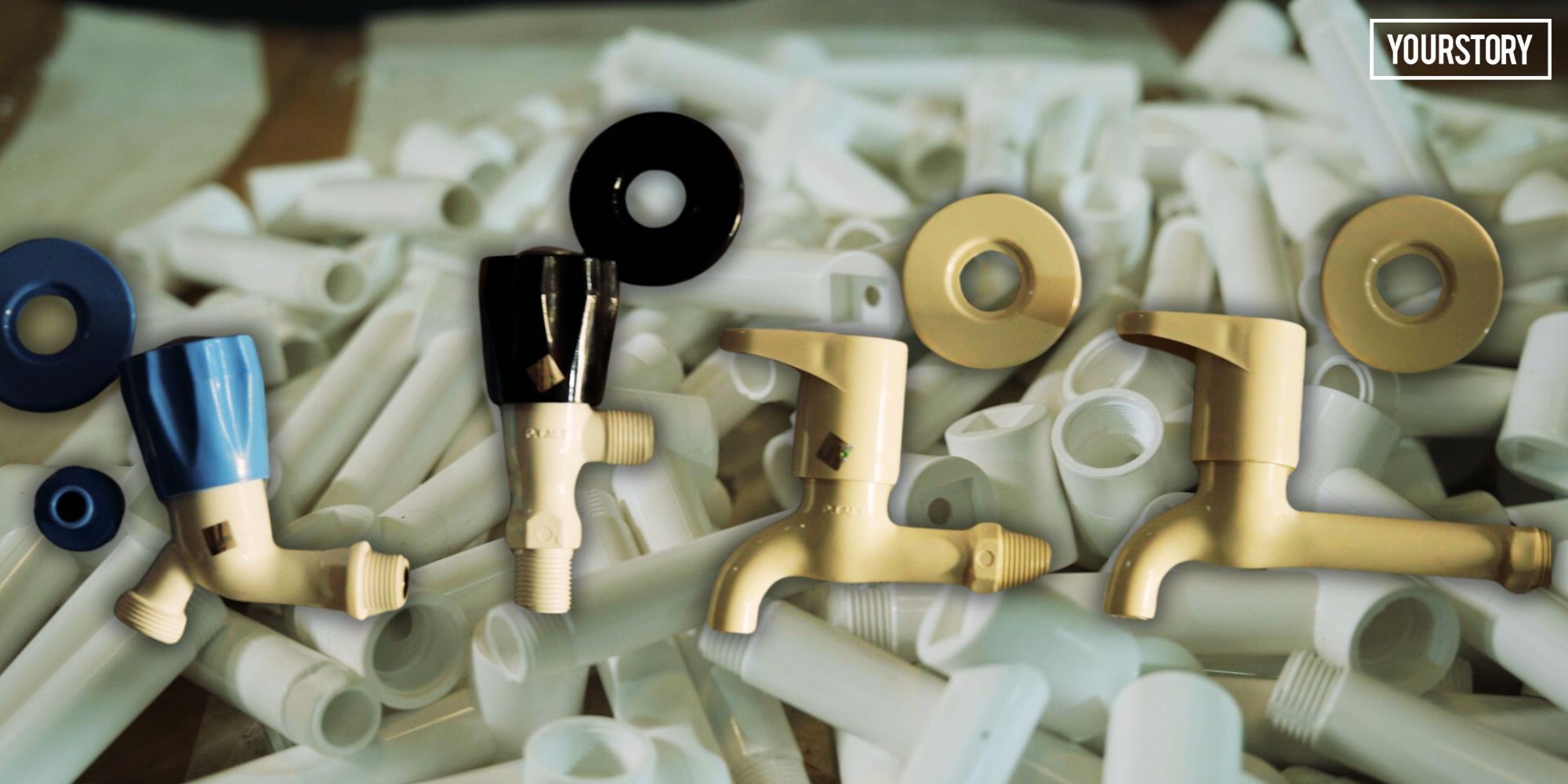
In Uttar Pradesh’s Mathura district, the manufacturing of sanitary products such as plastic taps, shower fittings, and connection pipes is shaped by everyday household demand and replacement cycles. These are practical utility items used in kitchens and bathrooms, and purchasing decisions usually depend on availability, compatibility with existing fittings, and price rather than design novelty. In this category, the ability to maintain a steady supply often matters more than offering a wide variety of designs.
The ecosystem behind sanitary product manufacturing depends on a chain that begins with plastic raw material procurement and moves through mould-based production, assembly, packaging, and market distribution. Units that can balance machine-based moulding with manual assembly work tend to sustain a smoother production rhythm. In many cases, multiple variants of taps and fittings are produced within the same operational cycle, helping maintain a consistent manufacturing flow.
Mathura’s strength in this sector lies in organised production continuity rather than one-off custom manufacturing. The focus is on keeping moulding machines running, maintaining assembly throughput, and ensuring finished stock is ready for dispatch through regular dealer networks.
Under the One District One Product (ODOP) initiative of the Government of Uttar Pradesh, sanitary products have been identified as the district’s notified product. Through this framework, local units are able to access a more structured ecosystem of support, including participation in exhibitions, financial assistance schemes, and other initiatives aimed at strengthening visibility and market outreach.
Among the entrepreneurs contributing to this cluster is Mohit Raghav, who operates a manufacturing unit producing plastic taps and related sanitary fittings. He notes that he entered this line of work after observing the increasing everyday use of plastic taps in homes. His unit began operations in 2021, in the period following the pandemic.
A Factory Workflow Built on Moulding and Assembly Lines
The product portfolio includes plastic taps of different formats along with showers and connection accessories. Production begins with plastic granules being fed into injection moulding machines where moulds define the shape of each component. The moulded parts are then moved to the assembly section.
In the assembly area, different parts are fitted, tightened, and checked before being packed. This process ensures that the final output is dispatch-ready finished stock rather than loose components. The workflow is organised so that moulding, assembly, and packing move sequentially.
Raghav explains that the factory floor operates through role-based responsibilities. Machine operators handle moulding machines, assembly workers manage fitting and finishing tasks, and packing staff prepare the products for dispatch. This structured flow helps maintain daily production targets with fewer interruptions.
Production planning is organised around product types and raw material usage. The moulding stage feeds components into the assembly line, and the finished items move into packed inventory that can be dispatched to dealers as orders arrive.
Markets and the Rhythm of Scale
The unit supplies products through regular market channels, with sales staff responsible for gathering dealer orders and converting them into dispatch schedules. Within this setup, production planning and market expansion often move together, as machines, moulds, and inventory levels must be aligned with expected market demand.
Raw material prices also influence operational decisions. Since plastic granules form the core input, fluctuations in their rates affect both batch scheduling and the pricing offered to dealers.
In Mathura’s sanitary products trade, scale becomes sustainable when production flow and market demand remain aligned. When moulding, assembly, and dealer orders move in rhythm with each other, repeat-demand items such as taps and fittings maintain a steady dispatch cycle—allowing the industry to operate on consistent volumes over time.